
HOW MEN DRIFT INTO ISOLATION
A few years ago, the U.S. Surgeon General issued an advisory warning that loneliness and social isolation had become a public health crisis. Researchers found that prolonged isolation can have health effects comparable to smoking fifteen cigarettes a day. That's a startling statistic.
But perhaps the more startling reality is that many men don't recognize isolation when they see it. Because we call it responsibility. We call it independence. We call it, “I’ve just been so busy.” But here’s the catch: The modern epidemic is not merely loneliness. It is men carrying responsibility without brotherhood. Most men don't wake up one morning and decide to become isolated. In fact, many never see it happening at all.
During adolescence and early adulthood, friendship often comes naturally. School, athletics, college, military service, and early careers place us in close proximity to other men. Shared experiences create friendships almost by accident. We see each other every day. We compete together. Learn together. Struggle together. The friendship roster is largely provided for us. Then life changes. School ends. Careers grow. Children arrive. Mortgages need paying. Aging parents require care. Calendars fill up. The responsibilities are good and often necessary, but something subtle begins to happen. The proximity disappears. And most men never replace it intentionally.
The daily interactions that once created friendship are no longer built into life. Months become years. Phone calls become less frequent. Conversations become more superficial. Most men never make a conscious decision to drift into isolation.
It simply happens while they're busy carrying responsibility. We remain surrounded by people and yet increasingly unknown. I see men daily living lonely lives in a sea of social contact. A man can spend all day interacting with coworkers, family members, neighbors, and church attenders while still carrying his deepest burdens alone.
That kind of isolation rarely announces itself. It quietly settles in. The Bible speaks to this reality long before modern researchers ever studied it. In the opening pages of Genesis, before sin enters the story, God makes an observation about Adam:"It is not good that the man should be alone."
That statement is profound and often overlooked. Adam had purpose. He had meaningful work. He had a relationship with God. Yet something was still missing.
Human beings were created for relationship. We were designed to know and be known. We were never intended to carry life's responsibilities in isolation.
Unfortunately, many men mistake isolation for strength. We admire self-sufficiency. We celebrate the self-made man. We quietly assume that maturity means handling our problems without needing help from anyone else. But carrying a burden alone does not make it lighter. It simply makes the carrier heavier.
Left alone, we become poor judges of ourselves. We justify things we shouldn't justify. We hide things we shouldn't hide. We drift in ways we cannot see.
This is one of the overlooked purposes of brotherhood. Trusted friends help us see what we cannot see on our own. They encourage us when we are discouraged, challenge us when we are drifting, and remind us who we are when life becomes confusing.
I've often thought of brotherhood like a campfire. A fire rarely goes out because someone attacks it. More often, it slowly burns down because no one keeps feeding it. Left unattended, even the strongest fire eventually becomes a bed of glowing embers. Relationships work much the same way.
Friendship requires investment. Brotherhood requires intentionality. Honest conversations, shared experiences, encouragement, accountability, and simply showing up for one another are the logs that keep the fire burning. Without them, isolation begins to feel normal.
The tragedy is that many men don't realize what they are missing until a crisis arrives.
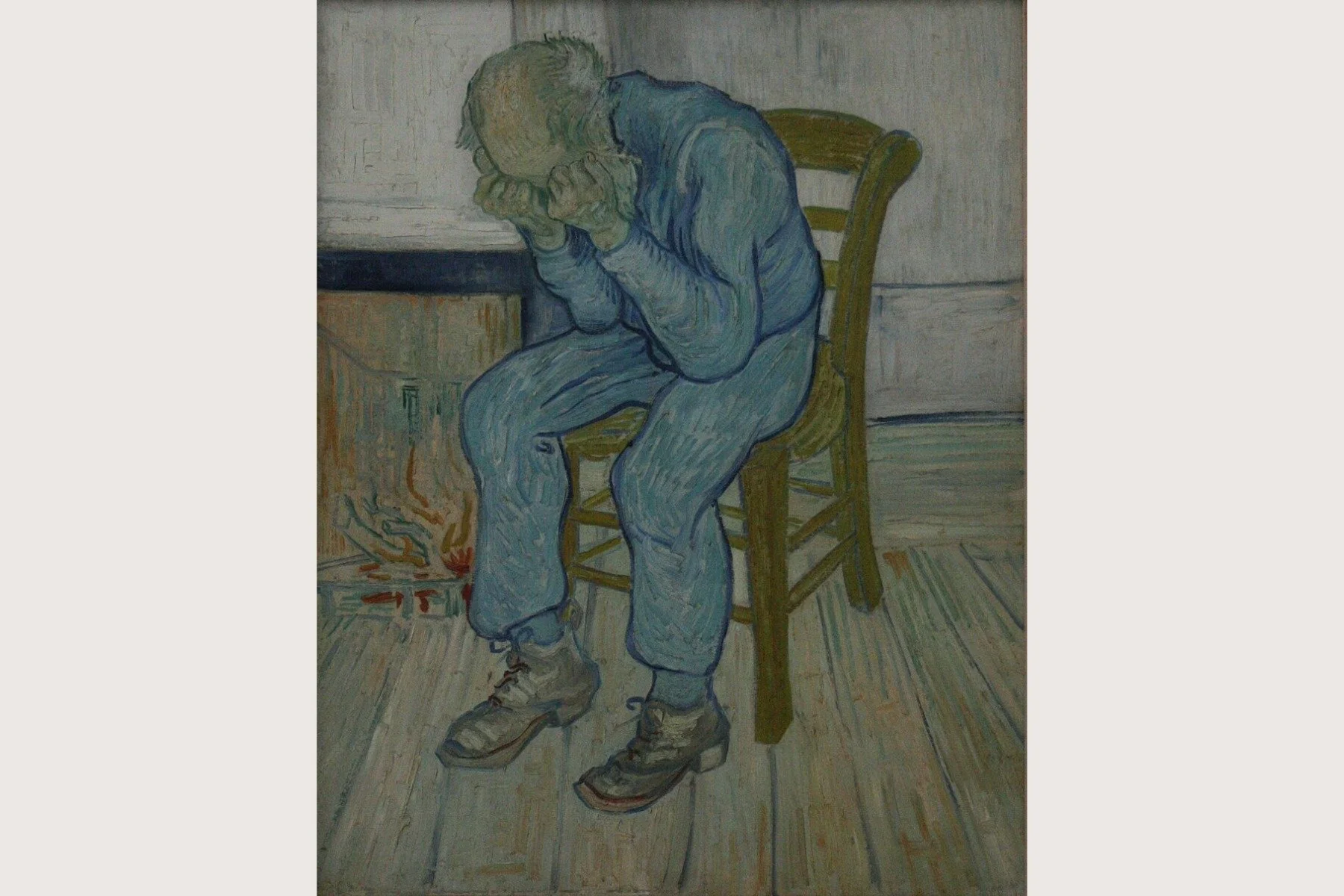
Sorrowing Old Man (At Eternity’s Gate), Vincent van Gogh, 1890. A man sits beside the fire carrying a grief no one else can see. Kröller-Müller Museum, Otterlo, Netherlands.
A marriage struggles. A temptation grows. A job is lost. A diagnosis is received. Suddenly they discover they have built a life full of responsibilities but lacking meaningful support. Yet it doesn't have to be that way.
One of the greatest gifts a man can give himself is a few trusted brothers who know his story, understand his struggles, celebrate his victories, and are willing to tell him the truth when he needs to hear it. Not acquaintances. Not followers. Not networking contacts. Brothers. People who help carry the load.
This week, take an honest look at your life. Who knows what you're carrying? Who can tell when you're drifting? Who has permission to speak truth into your life? If no one comes to mind, don't settle for that. Take one step toward being known. The modern epidemic is not merely loneliness. It is men carrying responsibility without brotherhood. And perhaps the first step toward healing is realizing you were never meant to carry it alone.
Carry the Fire,
SCOJO
