
I THOUGHT I’D BE FURTHER ALONG
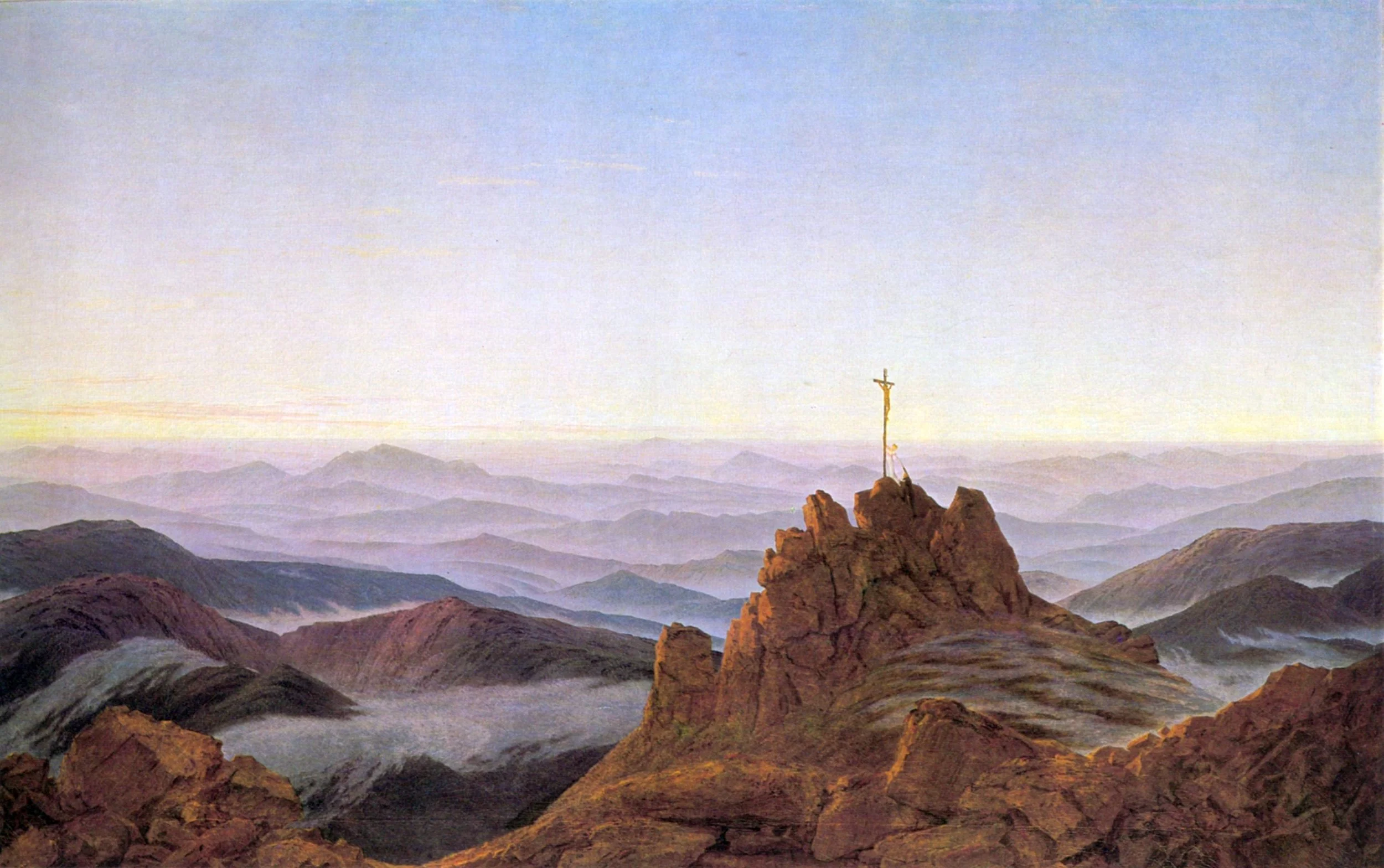
Caspar David Friedrich, Morgen im Riesengebirge
If you’ve spent any amount of time following Jesus, you’ve probably had this thought at least once. I really thought I’d be further along by now.
Not further in your career or your finances. Further in your faith.
You imagined that by now you would be more patient, quicker to forgive, more consistent in prayer, and less shaken when life became difficult. Instead, you still wrestle with fear, pride, impatience, and some of the same temptations you’ve battled for years. It’s easy to wonder whether you’re actually growing at all.
I think part of our discouragement comes from the way we think about the Christian life. Conversion has a clear beginning. There is a moment when we trust Christ. Many of us can point to the day we surrendered our lives to Him. We celebrate baptisms because they mark that beautiful starting line. But after that, the trail seems to disappear.
We’re told to grow in our faith, and rightly so. But few people ever explain what that growth actually looks like. We know where the journey begins, yet many of us spend the rest of our lives wondering whether we’re still making progress. I’ve noticed something similar while guiding men in the mountains. Somewhere during every expedition, someone eventually asks, “How much farther?” I usually smile and point toward the next ridge.
The truth is, if I stopped the group and announced every mile that remained and every foot of elevation still ahead of us, morale would disappear in a hurry. Instead, we focus on the next section of trail. What I’ve learned over the years is that hikers don’t simply need motivation. They need confidence that they’re still on the right path.
A trail marker doesn’t remove the climb. It simply reassures you that you’re headed in the right direction. The Christian life works much the same way.
Many of us assume maturity should happen automatically if we’ve been Christians long enough. We measure our progress by dramatic experiences or by finally reaching some imagined version of spiritual perfection. When neither happens, we quietly conclude that we’re failing.
But Scripture paints a different picture.
Near the end of his life, after decades of following Christ, the apostle Paul still wrote, “Not that I have already obtained all this, or have already arrived at my goal… but I press on.” Paul didn’t sound like a man who had arrived. He sounded like a man who was still following. Perhaps that’s the point. Spiritual maturity isn’t built on occasional mountaintop moments. It’s formed through thousands of ordinary decisions to trust, obey, repent, forgive, serve, and keep walking with Jesus.
Most of that growth is almost imperceptible while it’s happening. Like watching a child grow, you rarely notice the change from one day to the next. It is only after looking back that you realize how much has changed. Maybe we’ve been asking the wrong question. I nstead of asking, Why am I not there yet?, perhaps we should ask, Am I still following the Shepherd today? Because growth is not measured by perfection.
It is measured by direction.
Looking back, I’ve realized that every worthwhile mountain I’ve climbed was reached the same way. Not by obsessing over the summit, but by faithfully taking the next step. Maybe that’s why Jesus never handed His disciples a map with every turn marked in advance.
He simply said, “Follow Me.”
It turns out that was enough.
Carry the Fire,
SCOJO
